Metal Gates in Round Rock, TX

Plain notes on metal gates in Round Rock, TX, covering steel and aluminum, clay soil footings, rust, hinges and the rules that shape a gate.
What We Cover
- Which Hinges and Latches Keep a Metal Gate Working for Years How hinge type, bearing, latch style and gate weight work together so a Round Rock metal gate swings and closes without drag.
- How Does a Metal Gate Fit a Sloped Lot Near Brushy Creek Gate frames that rack, rails that follow the grade and swing paths that clear a rise, for lots that fall toward Brushy Creek.
- Where Does Rust Start on a Metal Gate in Central Texas The weld seams, hinge pockets and bottom rails where rust begins on a Round Rock metal gate, and how to catch it early.
- What Do Round Rock Neighborhood Rules Say About a Metal Gate What to check with a Round Rock neighborhood association, setback lines and easements before a metal gate design is drawn.
- How Deep Should Metal Gate Posts Go in Round Rock Clay Why expansive clay in Williamson County moves gate posts, and how depth, bell footings and concrete shape keep a gate hanging true.
- Should a Round Rock Gate Be Steel or Aluminum How steel and aluminum behave on a Round Rock property, from weight and sag to rust, heat and the swing of a long span.
Metal Gates in Round Rock, TX
A metal gate in Round Rock, TX lives with heat, humid spring storms and clay that moves under every post. Those three conditions decide which metal, which footing and which hardware hold up, and they come before any question of style.
What the work looks like on the ground
Most gate jobs start with a measured opening and a look at the soil. A steel frame in square tubing, welded and then galvanized or primed, is cut to the opening with a gap set for summer expansion. Pickets, rails and a diagonal brace go in before the powder coat, and the hinge and latch hardware is chosen for the weight of the leaf.
Why the lot matters
Lots near Brushy Creek fall toward the water, and yards around Forest Creek stay damp longer after rain. Neighborhoods close to Old Settlers Park often carry association rules on height and finish, and driveways off Interstate 35 and the streets around Dell Diamond and Round Rock Premium Outlets see steady traffic and dust. Each setting pushes the design toward a different swing, slide or cantilever layout.
Metals, coatings and moving parts
Steel gives stiffness for wide spans, aluminum resists moisture on damp corners, and wrought iron style work suits decorative entries. Powder coat over galvanized steel is the usual defense against rust, and an operator on an electric gate needs a rigid frame and a manual release. Pflugerville and the rest of Williamson County share the same clay, so the footing advice carries across the area.
Guides
The pages here cover steel against aluminum, post depth in expansive clay soil, where rust starts, neighborhood rules, sloped lots, and hinges and latches. Two longer articles follow a gate through the seasons and explain how an operator is planned.
Latest Guides

How Is a Gate Operator Planned for a Round Rock Driveway
What decides which operator a gate needs?

The gate decides the operator, not the other way around. Weight, width, swing direction, slope and how often the gate cycles each point to a particular drive type, and picking an operator first and forcing a gate to fit it is the usual source of failures. A frame built for a hand latch is rarely stiff enough for a motor, so the planning starts with the gate and ends with the motor.
In Round Rock the choices are shaped by clay soil, summer heat, and the layout of the lots. Driveways range from wide flat entries off the main roads to short sloped drives near the creeks, and each one favors a different layout.
Which gate types take which drive?
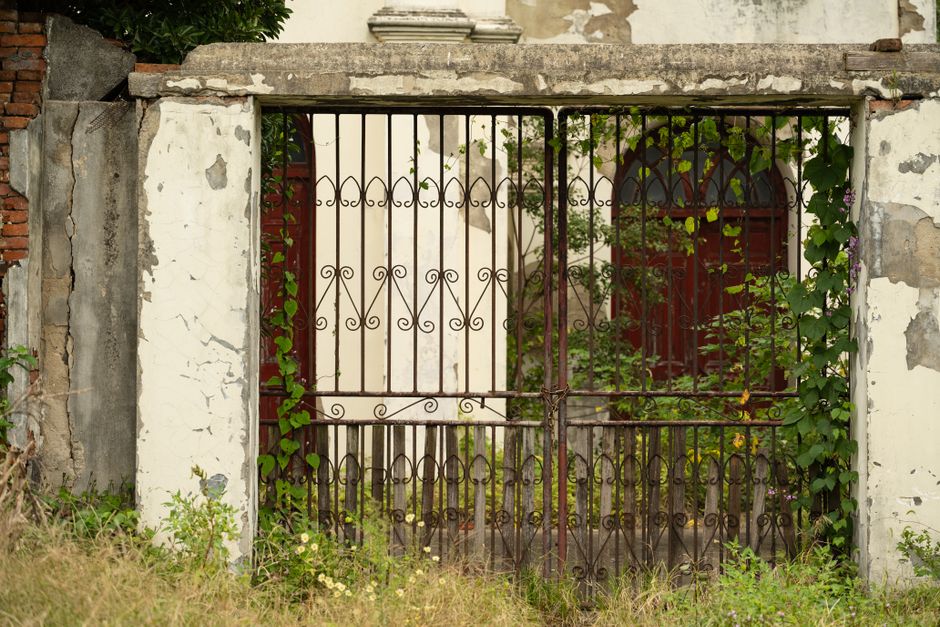
Four layouts cover almost every residential driveway, and each has its strengths. The table sets them side by side.
| Layout | Best for | Watch for |
|---|---|---|
| Single swing | Narrow drives with room to swing inward | Leaf weight on one hinge post |
| Dual swing | Wide drives with space on both sides | Two leaves must stay in time |
| Slide gate | Drives with little swing room or a rise | Track kept clear of debris |
| Cantilever gate | Uneven or soft ground along the opening | Long counterweight section and stiff posts |
A single swing leaf works well when the drive is flat and the leaf is not too long. Past about twelve feet, the weight on one post asks too much of the footing, and a dual swing pair spreads the load. A slide gate or cantilever gate avoids the swing arc completely, which makes them the usual answer on a sloped driveway or one that sits close to the street.
Why does frame stiffness matter?
An operator pushes or pulls at one point on the frame, and any flex in the frame shows up as a binding, jerking motion. A steel frame in heavy tubing with a welded diagonal brace transfers that force cleanly. A light frame twists, and the operator then fights the gate every cycle until something wears out.
Aluminum can work with an operator when the frame is sized up and braced, but it has less margin. A leaf in thin aluminum tubing that looked fine on a hand latch can rack under a motor, and a rack shows up as a gap at the latch side. Choosing a heavier section at the start is far easier than fixing a flexing leaf later.
The posts carry the same load. A hinge post that leans a quarter inch under a hand pushed gate can lean an inch under an operator. Deep bell footings in expansive clay soil keep the posts steady, and a footing that holds a gate for years of hand use may still need reinforcing for a motor.
What power does an operator need?
Operators run on one of three sources: a line voltage connection, a low voltage transformer, or a solar panel with a battery. Line power suits heavy gates that cycle often. Low voltage suits lighter swing gates and keeps trenching shallow. Solar suits a drive far from the house, as long as the panel gets clear sun and the battery is sized for the cycles.
A buried conduit from the house or a pole to the operator is the most common installation step that gets underestimated. The trench has to cross the drive, miss the utility lines, and end at the post with room to turn. Calling for line marks before digging keeps a shovel from finding a buried line, and many lots in Williamson County carry easements that cross where a trench would naturally run.
Summer heat matters for the electronics. A control box in direct sun on a black enclosure can overheat, so a shaded mount and a ventilated box add years to the board.
Which safety devices are required?
An automatic gate moves a heavy object near people and vehicles, and the safety devices are not optional. Photo eyes across the opening stop the gate if something crosses the beam, and edge sensors on the leaf stop it on contact. A reversing function on the operator itself adds a third layer, and a good installation uses at least two of the three.
Every operator also needs a manual release. A power failure or a dead battery leaves the gate shut, and a release lets the owner or an emergency crew push it open by hand. The release should be easy to reach, labeled, and tested at install and again each year.
Near Interstate 35 and other busy roads, a gate that opens onto a street needs enough setback that a waiting car does not block traffic while the leaf moves. The setback and the opening time are worked out on the plan, not on the day of install.
How do entry controls fit in?
The operator opens the gate, and the entry system decides who can ask it to. Remote transmitters, keypads, intercoms and phone based controls all connect to the same control board. A keypad on a post suits a household that does not want a remote on every visor, and an intercom at the street suits a drive that visitors approach often.
Placement matters more than the device. A keypad mounted too far from the lane forces a driver to open the door, and one mounted too close to the gate path can be clipped by a swinging leaf. A stand set at driver window height and a few feet back from the path of the leaf is the usual answer.
What does yearly care for an operator look like?
An operator asks for a short check once a year and a little more after a long wet spring. Test the photo eyes by walking through the beam, test the edge sensor by pressing it, and pull the manual release to confirm it still works. Wipe dust off the track or the chain and put a drop of oil where the maker says to.
Battery backups lose capacity over a few years, and a summer in Round Rock shortens that. A battery that runs a gate for a day in year one may run it for an hour in year four. Replacing it on a schedule is far easier than being locked out after a storm.
Where do most operator problems start?
Most problems start with the gate, not the motor. A leaf that drags, a post that leans, or a track filled with leaves and grit will make a perfectly good operator look faulty. The motor sees a stronger load, trips its limit, and stops, and the owner assumes the electronics have failed.
Fixing the mechanical side first is the quick way to find out. Swing the leaf by hand with the operator released and feel for tight spots. If the gate does not move freely by hand, an operator will not improve it, and the fabricator or installer should adjust the hinges, the track or the posts before blaming the control board.
How does the area affect the plan?
The same clay, the same heat and the same storms apply across Round Rock, Pflugerville and the rest of Williamson County, so the planning habits transfer. Drives near the creeks need drainage thought through for the track and the control box. Drives near the busy corners need setback and visibility checked. Neighborhoods around Old Settlers Park and Dell Diamond often carry association rules that cover operator boxes and keypad posts, and the written approval is worth getting before the posts are set.
A plan that covers the gate type, the frame, the footings, the power run, the safety devices and the entry controls in that order tends to survive. Each step supports the next, and skipping one tends to show up as a callback in the first summer.
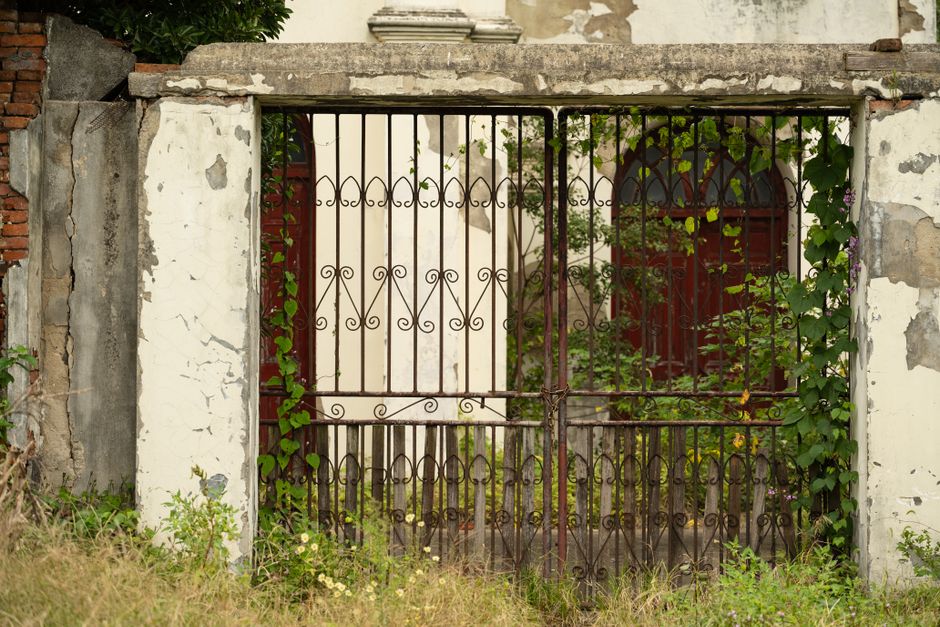
how a round rock gate ages through the seasons
What does a Round Rock year do to a metal gate?

A Round Rock year runs a gate through four different kinds of stress, and each one leaves its own mark. Spring brings wet clay and storms, summer brings heat that pushes metal to its limit, fall brings dry cracked ground and wind, and winter brings the occasional hard freeze. A gate that was fitted well absorbs all of it without complaint, and a gate that was fitted badly shows the weak points within two years. Knowing what each season does makes it easy to spot the first sign of trouble.
Round Rock sits in Williamson County on the edge of the blackland clay, and the soil is the quiet driver behind most gate problems. Water enters the ground in spring and leaves it in summer, and every post in that ground moves a little with it. The metal itself, whether steel or aluminum, mostly reacts to heat, moisture and the fit of its hardware.
How does spring treat a gate?

Spring is the wettest stretch, and it tests the coating and the footings first. Storms soak the clay around each post, the ground swells, and the posts can shift upward or lean slightly. Standing water collects at the bottom rail and around hinge barrels, which is where rust begins on a chipped frame.
A spring walk around the gate takes ten minutes and catches most problems. Look at the bottom of every post for a gap between the concrete and the soil. Run a hand along the bottom rail and the weld seams, looking for bubbles in the finish. Swing the gate through its full arc and watch the latch end, since a leaf that drags in April usually points to a post that moved over winter.
Gates near Brushy Creek and in low yards by Forest Creek stay wet longer than gates on higher ground, so they deserve a second look after the heaviest storms. Drain holes in the bottom of hollow rails should be clear, because a plugged hole turns a rail into a small water tank.
What does summer heat change?
Summer heat makes metal grow, and the gate has to have room for it. Steel expands a little over the length of a twelve foot leaf, and aluminum moves about twice as much. A latch gap that looked wide in February can close completely by August, which is why a gate that binds only in the afternoon is almost always a thermal fit problem and not a broken part.
Dark finishes absorb the most heat. A black powder coat in direct afternoon sun can get too hot to hold, and the surface expands and contracts with the daily cycle. A quality coating handles that for years, but a thin or poorly cured coat can chalk, fade or crack at the edges, which is the start of a rust path on steel.
Summer is also when clay shrinks and pulls away from posts. A gate that was square in spring may hang slightly out of square by late August, and a gap that opens at the top of the latch post is the usual sign. Hinges with adjustment let a fabricator pull the leaf back to square in a short visit.
Does fall help or hurt?
Fall is the dry, windy stretch, and it is usually the easiest season for a gate. The ground has dried and cracked, the posts have stopped moving, and the air carries dust that works into hinges and tracks. A sliding or cantilever gate picks up grit on the track, and a rolling carriage that sounded smooth in June may grind in October.
Fall is the right time for maintenance. Clear the track with a stiff brush, oil the hinge barrels and check every bolt for tightness. Touch up any chip in the finish with a zinc rich primer and a matching topcoat before the next wet season. A small repair in October keeps rust from spreading under the coating over winter.
Wind is the other fall factor. A solid panel or a leaf with tight pickets catches wind like a sail, and a latch that depends on gravity can fail in a gust. A spring loaded latch or a drop rod holds a gate shut when the wind picks up, and a wind stop post keeps the leaf from slamming into the fence.
What can winter do?
Winter in Round Rock is mild most years, but a hard freeze arrives often enough to matter. Water trapped inside hollow tubing freezes and expands, and a seam that was already weak can split. This is another reason drain holes and sealed top caps matter on every rail and post.
Cold also stiffens grease and slows operators. An electric gate that opens smoothly in October may move slowly on a freezing morning, and a battery backup loses capacity in the cold. A gate on a slide track can freeze to the rail after an ice event, so the first step is to clear the track gently and never force the carriage.
After a freeze, look at the welds and the bottom of the posts. A hairline crack at a weld, or a line of orange rust that was not there in fall, gets attention before spring storms arrive.
Which parts wear out first?
Hinges, latches and the bottom of the frame wear before anything else. Hinge barrels carry the full weight of the leaf every time the gate opens, and a gate that opens a few times a day swings thousands of times a year. A sealed bearing lasts far longer than a plain barrel, but even the best hinge needs an adjustment now and then.
Latches wear at the catch plate, where the leaf meets the post. A latch that has to be lifted or pushed to close usually reflects a small drop in the leaf. Raising the leaf at the hinge brings the latch back into line without touching the latch at all.
The bottom rail takes splash, sprinkler spray and lawn clippings. It is the first place rust shows, and a raised bottom rail with a clear drain hole lasts much longer than a rail set an inch from the ground.
How often should a gate be checked?
Two checks a year cover most gates, one in spring before the heavy storms and one in fall before winter. Each takes about fifteen minutes with a flashlight, a level and a little oil. A gate that is checked twice a year rarely needs more than a touch up, while a gate that is never checked can go from a small chip to a failed hinge in a few seasons.
A short checklist keeps it simple. Look at the posts for lean, swing the gate through its arc, check the latch gap, oil the moving parts, clear the track, and touch up any chip. That is the whole job, and it repays itself every year.
What about Pflugerville and the rest of the area?
The pattern holds across the region. Pflugerville, Round Rock and the rest of Williamson County share the same clay, the same summer heat and the same spring storms, so a gate built for Round Rock conditions fits the neighboring towns too. The difference is usually in the lot, not the city, and a sloped or damp yard changes the checklist more than a map line does.
Gates near busy roads such as Interstate 35 collect more dust and exhaust film, and a quick rinse with a hose a few times a year keeps the finish clean. Gates near parks and creeks collect leaves and moisture, and clearing the base keeps the bottom rail dry.
Does the metal choice change the calendar?
Steel and aluminum age differently, and the checklist shifts a little with each. Steel asks for more attention to the finish, because a chip is the start of rust. Aluminum asks for more attention to the fit, because it moves more with heat and flexes more under load. A galvanized steel frame under a powder coat splits the difference and tolerates a missed check better than bare painted steel.
Wrought iron style work, whether it is real iron or steel shaped to look like it, has more joints and more places for water to sit. Scrollwork and decorative collars catch dust and moisture, so a yearly look with a brush and a touch up pen keeps them sharp.
Nearby Service Areas
We also cover wrought iron gates austin, tx pros in Austin.